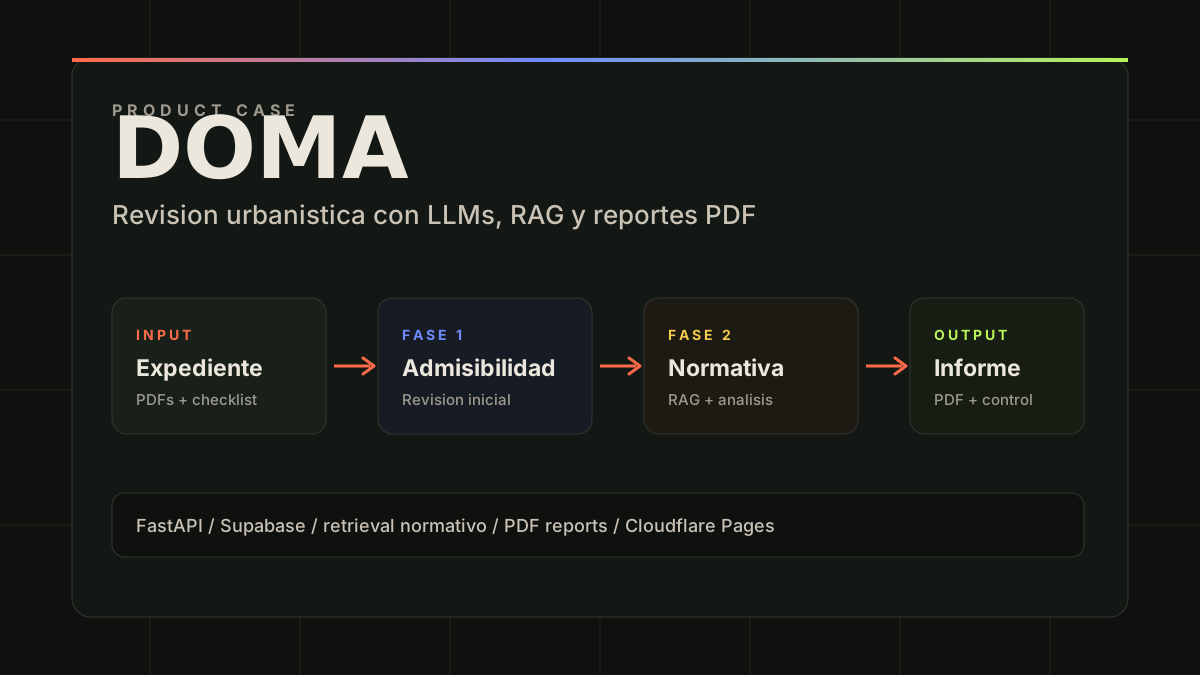
Product pipeline: case file → admissibility → regulatory analysis → report and control center.
Public
DOMA
Urban planning review product for architecture firms in Chile: case-file upload, two-phase LLM analysis, live progress narrative, and professional PDF reports.
Constraints
- Public case based on visible information and the internal roadmap brief.
- Usage metrics, client figures, and repository links are not published until visibility is confirmed.
TL;DR
- Commercial product in production for reviewing urban planning files and generating actionable reports.
- Two-phase pipeline: admissibility first, regulatory analysis second.
- Connects document upload, regulatory retrieval, progress narrative, final PDF, and DOM control center.
Reusable patterns
- Split document review into explicit phases to make progress auditable and reduce ambiguity.
- Combine regulatory RAG with report generation to close the loop from case file to deliverable artifact.
- Design the experience as an operating product, not a one-off demo: state, retries, reports, and control.
- Use a parent platform (Vector Público) to turn a reusable capability into specific verticals.
Context
Urban planning review combines heterogeneous documents, regulation, and criteria that need to be explained in a professional report.
DOMA turns that flow into a product: case-file upload, intelligent checklist, automated two-phase analysis, and PDF report delivery.
Vector Público acts as the parent platform; DOMA is the first public vertical built on that document and regulatory analysis capability.
Decisions
- Split the analysis into two phases: Phase 1 for admissibility and Phase 2 for regulatory analysis.
- Separate backend services in Docker Compose (fase1, fase2, chat_indexador, health) to isolate operational responsibilities.
- Keep a retrieval/RAG layer over regulation so the analysis can be grounded in consultable sources.
- Generate a live progress narrative so users understand what is happening instead of only waiting for a final result.
- Close the workflow with professional PDF reports and a DOM control center for follow-up.
Architecture
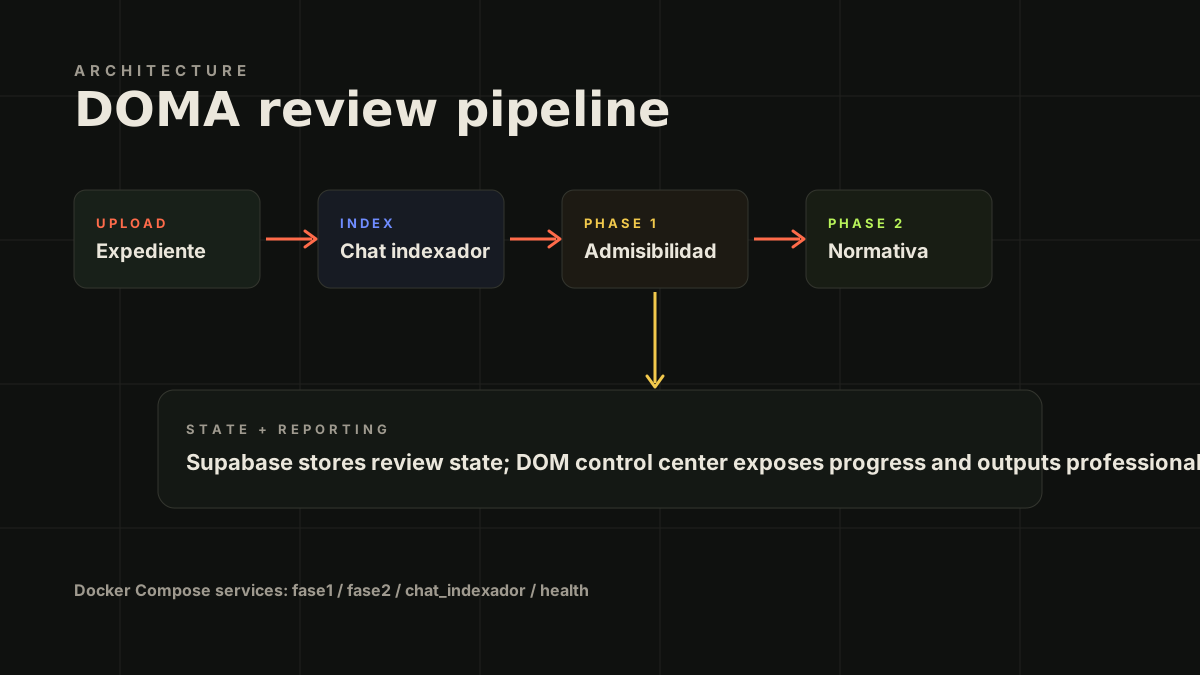
- FastAPI coordinates specialized services for analysis and indexing.
- Supabase keeps case-file state, outputs, and operational control.
- The public landing runs on Cloudflare Pages; the app is served as a separate user-facing surface.
Outcome
- Anchor case for the site: it shows a data product being built and operated, not just an analysis or dashboard.
- The phased design makes document analysis easier to explain and separates admissibility from regulatory review.
- The architecture turns a general document AI capability into a concrete vertical for architecture firms.